

Mary Berry’s Dorset Apple Cake Recipe
If you’re making a Dorset apple cake, there are a few common mistakes to watch out for. Most versions go wrong in the same way: either the apple pieces are cut too thick, leaving the centre undercooked while the edges are already done, or all the fruit is piled on top, causing the distinct layers to disappear.
In her book “Mary Berry Cooks the Perfect: Step by Step” Mary Berry highlights the precise steps that can make or break this bake.
One of the signature features of Mary Berry’s Dorset Apple Cake Recipe is its two sponge layers, with apple slices pressed between them.
This post recreates the spiced Dorset apple traybake featured in her book. If you don’t have an electric mixer, you can use a wooden spoon to beat the mixture for 3 minutes instead of 2. The batter is ready when it looks pale and smooth.

Bramley vs. Eating Apples: Which Works Best in This Cake?
Some bakers, such as the writer at Cuisine Fiend, prefer firm eating apples because they hold their shape during baking.
Mary Berry, on the other hand, recommends Bramley apples, which soften quickly in the oven. Both approaches have their merits.
I baked two pans side by side to compare the results. The Bramleys developed a soft, jammy layer after 44 minutes, while the Granny Smiths held their shape but needed 52 minutes to bake. The extra time in the oven also caused the outer sponge to dry out.
However, those who prefer firm apples have a valid point: the slices remain visible and retain a slight bite. This makes eating apples a better choice if Bramleys are not available locally.
Before you begin, keep in mind that this recipe contains wheat, eggs, milk, and butter, so it is unsuitable for anyone with allergies to these ingredients.
Each slice contains approximately 24 g of sugar, and the recipe is best suited for serving a crowd of 12. If you have any dietary or health concerns, consult your doctor.
Ingredients for Dorset Apple Cake
1 cup (225 g) unsalted butter, softened: Beaten with the sugar, it traps tiny air pockets that lift the sponge. Kerrygold is my pick, since its lower water content keeps the cake tender. Soften it on the counter, never in the microwave.
1 tablespoon unsalted butter, for greasing: Butter under the parchment glues the paper flat, so it cannot curl into the batter. Any stick from the fridge works.
550 g (about 4 medium) Bramley apples, peeled and cored: These carry the cake. Their high acid and low sugar let them soften fully and release juice into the sponge. I buy mine at a farm stand in October.
Granny Smith apples work in place of Bramleys. Expect firmer slices and about 8 extra minutes in the oven.
Juice of ½ lemon (about 1½ tablespoons): The acid slows browning, since cut apple flesh darkens on contact with air. Fresh juice has a cleaner tang than bottled. Toss the slices within a minute of cutting.
1 cup packed (225 g) light muscovado sugar: Its molasses holds water, so the sponge stays moist for days. I order Billington’s online by the bag. Press out hard lumps with your fingers.
Domino light brown sugar swaps in one to one. The sponge bakes a shade paler because it carries less molasses.
2½ cups (300 g) self-rising flour: It gives structure and lift, as baking powder is already mixed in. King Arthur is my steady choice. Spoon it into the cup and level it, since scooping packs in extra flour.
Plain all-purpose flour works with 3¾ teaspoons extra baking powder and ½ teaspoon salt whisked in. That matches what self-rising flour already carries.
2 teaspoons baking powder: The extra boost lifts a batter loaded with heavy apple slices. Check the date on the tin, since old powder loses strength and leaves a flat sponge. Clabber Girl lives in my cupboard.
1 teaspoon ground cinnamon: Half goes in the batter and half between the layers, so the spice reaches the middle. Penzeys Vietnamese cinnamon has a higher oil content than most, so it smells sharper. Old jars fade, so buy small.
4 large eggs, room temperature: They bind the batter and add lift as trapped air expands in the oven. Cold eggs make the butter seize into lumps. Land O’Lakes large eggs are my regular buy.
1 tablespoon whole milk: It loosens the thick batter so it reaches the corners. Horizon whole milk is what I keep.
Oat milk works here. One tablespoon is too little to change the sponge.
1 tablespoon powdered sugar, for dusting: It sweetens the top layer, since the apples carry no sugar of their own. Use a fine mesh sieve. Dust just before serving, as it melts into damp apples overnight.
Brown sugar works too, as Mary suggests, for a darker top.
Kitchen Equipment You’ll Need
- 9 x 13-inch metal pan: Light metal browns evenly
- Parchment paper: Lifts the cake out
- Electric hand mixer: Cuts beating to 2 minutes
- Large mixing bowl: Holds the whole batter
- Palette knife: Spreads the top layer
- Sharp knife: Gives even 3 mm slices
- Wire rack: Cools the cake evenly
- Fine mesh sieve: Dusts the powdered sugar
How to Make Dorset Apple Cake
1. Heat the Oven and Line the Pan: Set the oven to 350°F (180°C) with the rack in the center.
Butter the 9 x 13-inch pan, then line it with parchment, leaving the paper hanging over the long sides. The overhang works as handles later.
2. Slice and Coat the Apples: Peel and quarter the apples, then cut out the cores. Slice each quarter about 3 mm thick, a little thicker than a nickel.
Toss the slices with the lemon juice in a shallow dish. They should look glossy, not brown.

3. Beat the Batter: Add the butter, sugar, flour, baking powder, ½ teaspoon cinnamon, eggs, and milk to a large bowl.
Beat with a hand mixer for about 2 minutes. The batter should look pale and thick, with no streaks of flour.
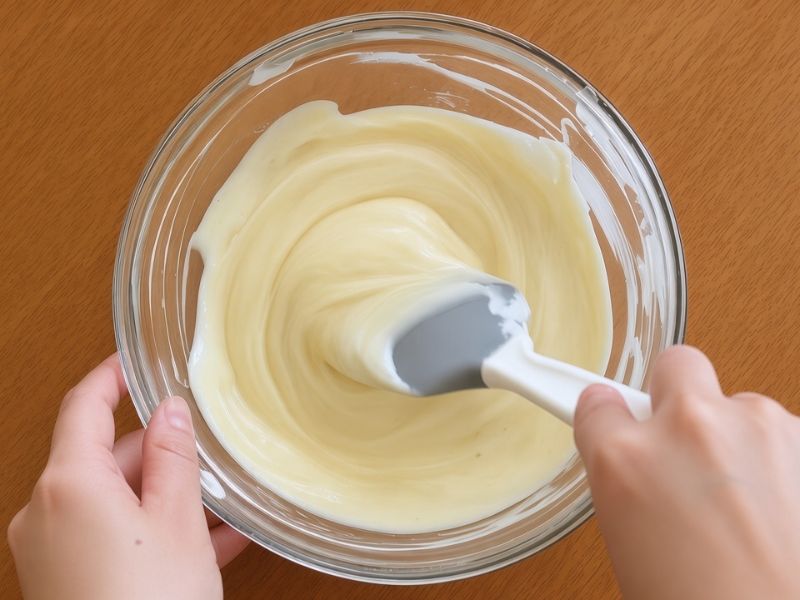
4. Spread the First Layer: Spoon half the batter into the pan. Press it into the corners with a palette knife. The layer will be less than 1 cm deep. No bare parchment should show.
5. Layer the Apples and Spice: Scatter half the apple slices over the batter and press them down firmly. Sprinkle the remaining ½ teaspoon cinnamon over the fruit.
Slices left unpressed rise into the next layer and cause streaky patches. Press again with a flat palm before covering.

6. Cover and Top: Spoon the rest of the batter over the apples. Drag a palette knife gently from the center outward, so the slices stay put.
Scatter the remaining apples loosely over the top and press them in lightly. Batter will rise through the gaps as it bakes.
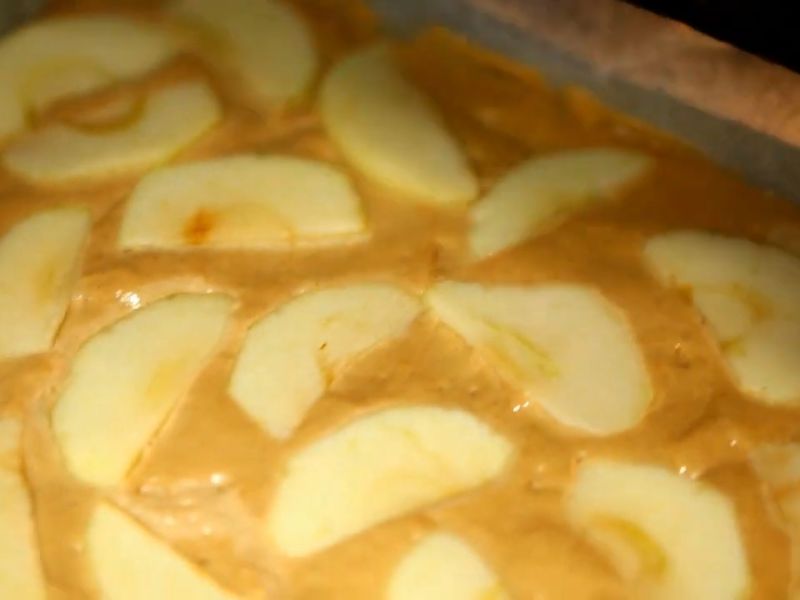
7. Bake: Bake for 40 to 50 minutes, checking from 38. My oven took 44 minutes. The cake is done when the sides pull from the pan and the top feels spongy but firm. The sponge should look pale gold, with apple edges just turning amber.
8. Cool and Dust: Cool in the pan for 10 minutes. Run a knife around the edges, then lift the cake out by the parchment.
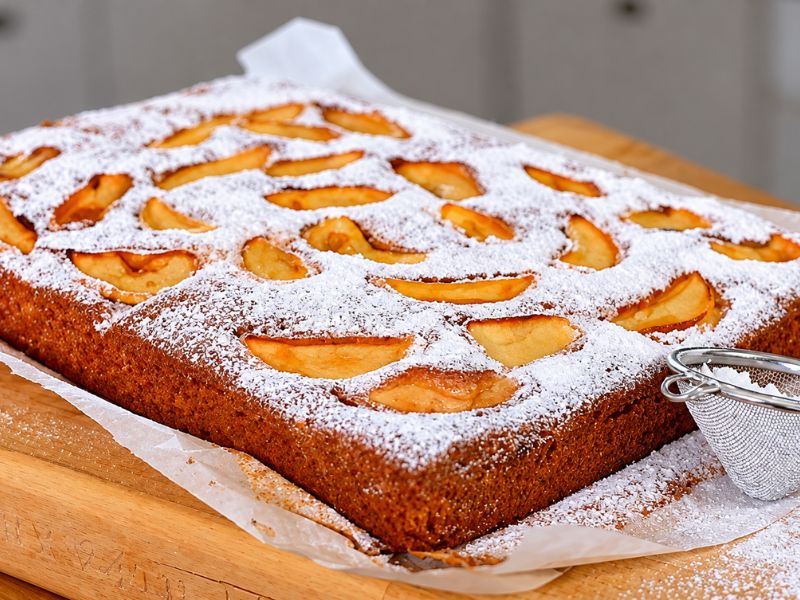
Slide it onto a wire rack to cool fully, then dust with powdered sugar. Cut 12 squares with a serrated knife.
Air Fryer, or Slow Cooker: Which Method Works Best?
An air fryer suits a half batch. Use a 7-inch round pan and drop the heat to 320°F (160°C). Cover the top with foil for the first 20 minutes. Start checking at 35 minutes.
A slow cooker gives a softer, steamed-style cake, because the lid traps moisture. Line a 6-quart insert with parchment and layer as usual. Rest a clean tea towel under the lid to catch drips. Cook on high for roughly 2 hours before checking.
Each swap changes the finish. The air fryer’s fan dries the surface fast, while the slow cooker leaves a pale top because steam stays trapped. The slow cooker does free up the oven on a busy baking day.
My Best Tips for Avoiding Common Apple Cake Problems
1. Dip in the Center: A sunken middle means the oven door opened early. Keep it shut for the first 30 minutes.
2. Dark Top, Pale Middle: Lay foil loosely over the pan at the 30-minute mark. Bake 5 to 8 minutes longer.
3. Pan Size Mismatch: A 9 x 13 pan is about 10 percent bigger than Mary’s 30 x 23 cm tin. Start checking at 38 minutes.
4. Tough Sponge: Beating past 3 minutes with a mixer tightens the batter. Stop once no flour streaks remain.
5. Watery Apple Pockets: Pat juicy slices with a paper towel for 2 minutes before layering.
6. Ragged Slices: Chill the cooled cake for 30 minutes. Cut with a serrated knife, using light sawing strokes.
How I Customize This Dorset Apple Cake
Pear and Ginger: Replace the apples with 550 g of firm Bosc pears and add ½ teaspoon ground ginger. Pears release less juice, so the sponge sets a few minutes sooner. I serve it with Earl Grey.
Late-Summer Plum: Mary notes that plums work too. Use 450 g of ripe plums, sliced thin, and skip the lemon. Their skins bleed purple into the batter, so I serve it warm with vanilla ice cream.
Orange and Raisin: Add the zest of 1 orange and ¼ cup raisins soaked in hot water for 10 minutes. Soaking stops the raisins from pulling moisture out of the batter. This is my coffee-break version.
Brown Sugar Crust: Sprinkle 2 tablespoons of demerara over the top before baking. It melts into a thin, crisp crust. My brother-in-law Tariq asks for this one and skips the powdered sugar.
Almond Top: Scatter ⅓ cup of sliced almonds over the final apple layer. They toast in the oven and add crunch against the soft slices. I bring this one to potlucks.
Nutmeg Boost: Add ¼ teaspoon of freshly grated nutmeg beside the cinnamon. Fresh nutmeg has more volatile oil than the jarred kind, so a little goes far. I use it on cold mornings.
What I Serve With Dorset Apple Cake
A warm square with a spoonful of clotted cream is the classic pairing. The cream stays cool and thick, so it melts slowly into the cinnamon sponge. Crème fraîche does the same job with a sharper tang.
Hot custard turns a slice into pudding. I use Bird’s custard powder, made thin, and pour it over a square straight from the oven. Pour it slowly so it pools around the apples. Vanilla ice cream works on warmer evenings.
For drinks, strong Assam tea cuts through the butter. Black coffee works too. A thin slice of sharp cheddar on the side is an old West Country habit. Its salt sets off the cooked apple.
My usual Sunday spread starts with ham sandwiches on soft white bread. Cucumber sandwiches follow, then a pot of Assam and the cake, still faintly warm. Everyone finishes with two squares.
How I Store, Refrigerate, and Freeze Apple Cake
Keep the cake at room temperature for up to 2 days in an airtight container. Lay a sheet of parchment between the cake and the lid. Apples release moisture, so the top turns damp by day two.
After that, refrigerate it for up to 5 days. Cold tightens the butter in the sponge, so let squares sit out for 30 minutes before eating. A cold square eats best with a hot cup of tea.
Freeze wrapped squares for up to 3 months. Wrap each in parchment, then foil. Thaw overnight in the fridge, still wrapped, so condensation forms on the wrapping and not the cake.
To bring back a fresh-baked feel, warm a square at 300°F (150°C) for 8 minutes, loosely covered with foil. The foil stops the top from over-browning. Dust fresh powdered sugar afterward, since the first coat melts away.
Dorset Apple Cake Recipe FAQs
1. Do I need to peel the apples?
Peeling is optional. Skins soften by 40 minutes and leave red flecks in the top layer. Keep slices at 3 mm either way, since thickness matters more than skin.
2. Can I mix the batter ahead of time?
No. Baking powder starts working once it meets the wet ingredients, so bake within 30 minutes. You can slice and lemon-coat the apples up to 2 hours early.
3. Can I use gluten-free flour?
Use a 1-to-1 gluten-free self-rising blend that includes xanthan gum. Expect a denser sponge, because gluten-free blends hold less air. Start checking at 45 minutes.
4. Does the cake need salt?
The original has none. With unsalted butter, add ⅛ teaspoon fine salt to the batter to balance the sugar.
5. Can I use margarine instead of butter?
Soft baking margarine works in equal weight and mixes easily. Avoid spreads under 60 percent fat, since their extra water makes the batter slack.
6. Can I use frozen apple slices?
Thaw them fully and pat dry with paper towels, because ice crystals leak water as they melt. Add 3 to 5 minutes to the bake time.
7. Can I bake it in a glass dish?
Yes. Drop the oven to 325°F (160°C), since glass holds heat longer than metal. Expect about 5 extra minutes and check the edges first.
8. How do I adjust for high altitude?
Above 3,000 feet, cut the baking powder to 1¾ teaspoons and add 1 extra tablespoon of milk. Thinner air makes batters rise fast and then collapse.
Thin slices, a firm press on each layer, and a check at 38 minutes are the habits that matter most. Keep those, and this tray bake will land evenly each time.
Mary Berry's Dorset Apple Cake Recipe
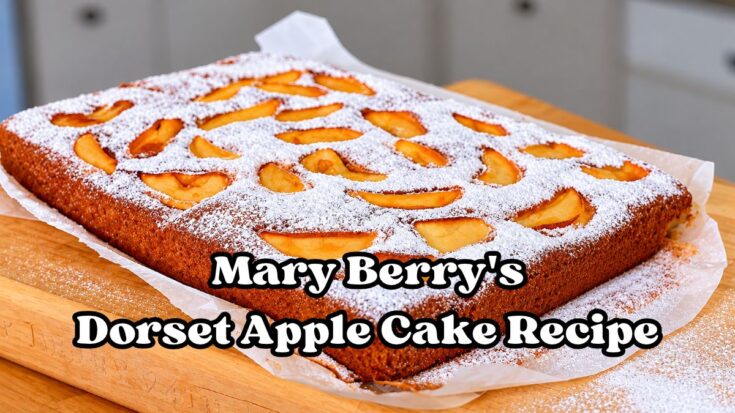
Mary Berry's Dorset Apple Cake Recipe with two cinnamon sponge layers and thin Bramley slices. One bowl, no creaming, ready in 65 minutes
Ingredients
- 1 cup (225 g) unsalted butter, softened
- 1 tablespoon unsalted butter, for greasing
- 550 g Bramley apples, peeled and cored
- Juice of ½ lemon
- 1 cup packed (225 g) light muscovado sugar
- 2½ cups (300 g) self-rising flour
- 2 teaspoons baking powder
- 1 teaspoon ground cinnamon
- 4 large eggs
- 1 tablespoon whole milk
- 1 tablespoon powdered sugar
Instructions
- Preheat the Oven and Prepare the Pan: Preheat the oven to 350°F (180°C) with the rack in the center. Butter a 9 × 13-inch pan and line it with parchment paper, leaving an overhang on the long sides for easy lifting.
- Prepare the Apples: Peel and quarter the apples, remove the cores, and slice each quarter about 3 mm thick. Toss the slices with lemon juice in a shallow dish to keep them from browning.
- Make the Batter: Add the butter, sugar, flour, baking powder, ½ teaspoon cinnamon, eggs, and milk to a large bowl. Beat with a hand mixer for about 2 minutes until pale, thick, and smooth.
- Spread the First Layer: Spoon half the batter into the prepared pan. Use a palette knife to spread it evenly into the corners, making sure the bottom is completely covered.
- Layer the Apples and Cinnamon: Arrange half the apple slices over the batter, pressing them down firmly. Sprinkle the remaining ½ teaspoon cinnamon evenly over the apples.
- Add the Remaining Batter and Apples: Gently spread the remaining batter over the apple layer using a palette knife. Arrange the remaining apple slices on top and press them lightly into the batter.
- Bake the Cake: Bake for 40–50 minutes, checking from 38 minutes. The cake is ready when the sides pull away from the pan and the top feels firm and spongy, with a pale golden colour.
- Cool and Serve: Let the cake cool in the pan for 10 minutes. Loosen the edges and lift it out using the parchment paper. Transfer to a wire rack to cool completely, dust with powdered sugar, and cut into 12 squares.
Nutrition Information:
Serving Size:
per serving, based on 12 squaresAmount Per Serving: Calories: 346Total Fat: 17.5gSaturated Fat: 10.5gTrans Fat: .6gCholesterol: 92mgSodium: 242mgCarbohydrates: 44gFiber: 1.8gSugar: 23gProtein: 5.2g