Saltgrass Steakhouse Brussels Sprouts Recipe
The Saltgrass Steakhouse Brussels Sprouts Recipe on this page started with a work trip to Fort Worth two winters ago. My sister ordered a side of sprouts almost as an afterthought, and the whole table went quiet for a minute.
She asked our server what the kitchen did differently, and he just laughed and said the ovens deserved credit. I wrote a note on my phone before we even left the table. My husband still teases me about it.
What Are Saltgrass Steakhouse Brussels Sprouts?
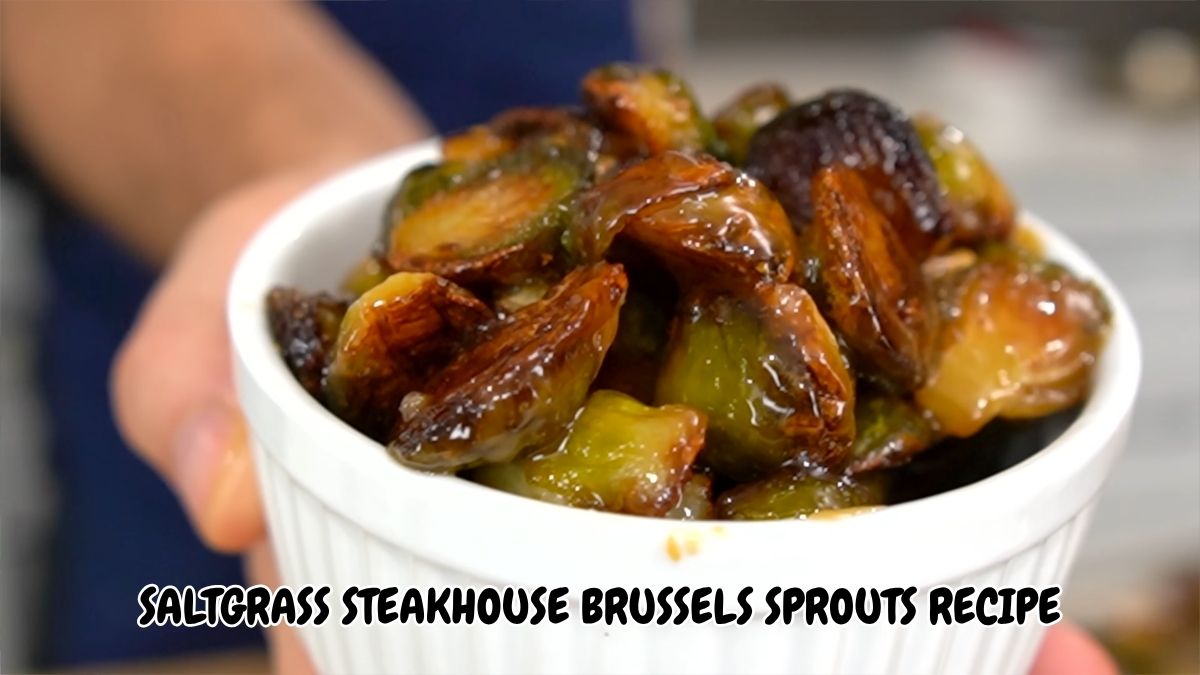
Saltgrass Steakhouse Brussels sprouts are a side dish built on contrast. The outer leaves turn dark and crisp in a hot oven, while the centers stay soft. A sweet and tangy glaze coats every piece before it reaches the table.
Most home versions skip the boiling step and go straight into the oven. That single choice changes everything about the final texture. Restaurant kitchens blanch the sprouts first. This seasons them all the way through and sets up a creamier center once roasted.
Is This an Authentic Saltgrass Steakhouse Recipe?
This is not an official Saltgrass Steakhouse recipe pulled from a corporate kitchen. Saltgrass has never published their exact method or ingredient list for this side dish. Everything here comes from tasting the dish at several locations and testing it at home.
Copycat recipes differ because no two cooks taste the same plate the same way. One person notices the bacon first. Another zeroes in on the glaze, and that shapes how each version gets written down.
Most copycat versions agree on a few things. Blanching before roasting shows up again and again, and so does a butter-based glaze. Bacon and toasted nuts appear often enough to count as core parts of the dish, not optional ones.
A restaurant kitchen has a hot commercial oven and a line cook doing this dish forty times a night. A home version relies on a regular oven and one sheet pan. The final plate can taste close, but the setup is not the same.
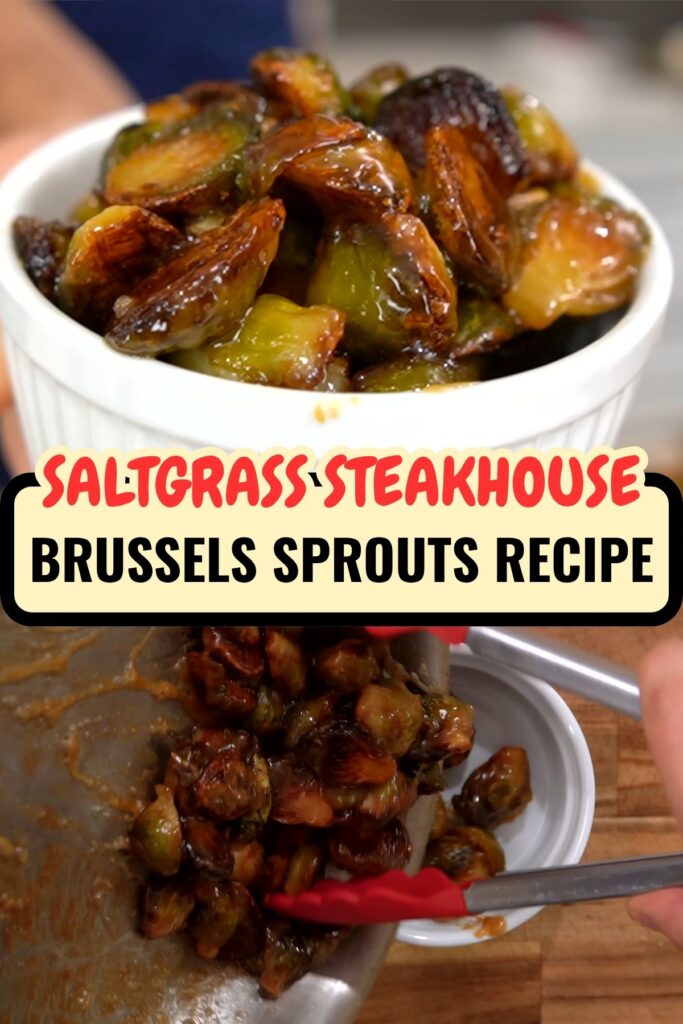
Ingredients for Saltgrass Steakhouse Brussels Sprouts
2 pounds Brussels sprouts: These are the whole point, so pick ones that feel heavy and firm with tight leaves. I dig through the bin at Trader Joe’s for the smaller ones since they roast evenly. Trim a sliver off the stem, or leaves fall apart in the pan.
4 quarts water plus 1 1/2 tablespoons kosher salt: This is the blanching liquid, and the salt here seasons the sprouts from the inside before they ever see the oven. I use Diamond Crystal kosher salt, since it dissolves fast and doesn’t taste harsh. Salt the water right before it boils, not after.
3 tablespoons olive oil, divided: Olive oil coats the sprouts so the cut sides sear instead of steam, and it also greases the sheet pan before roasting. I reach for Graza Sizzle, since its higher smoke point holds up at 425°F without turning bitter.
Avocado oil works well in place of olive oil, and the flavor barely changes, though the sear looks a little less golden.
1 teaspoon kosher salt, for seasoning: This second hit of salt goes on right before roasting, layering on top of the salt already in the sprouts from blanching. Skip it and the sprouts taste flat, even with a good glaze on top.
1 medium shallot, thinly sliced: Shallot brings a milder, sweeter bite than a regular onion, and it softens fast in a hot pan. In place of shallot, a small red onion works, though the flavor turns sharper and more assertive.
2 cloves garlic, minced: Garlic goes in with the shallot near the end of the sear, so it browns instead of burning into something acrid. Fresh cloves matter here. The jarred, pre-minced kind turns bitter fast in a hot pan.
6 strips bacon, diced: Bacon fat does double duty here, since it seasons the aromatics and adds a smoky note the glaze alone can’t reach. I like thick-cut Wright bacon, since it holds its shape and doesn’t shrink into lace.
1/3 cup sherry vinegar: Sherry vinegar gives the glaze its sharp backbone, cutting through all that butter and maple. It’s not just sweet, it’s balanced by that sharp edge, which keeps the glaze from feeling heavy.
In place of sherry vinegar, apple cider vinegar or cherry vinegar both work, though the glaze turns a touch sweeter and less nutty.
1/4 cup maple syrup: Maple is the sweet half of the glaze, and it reduces down into something close to caramel after a few minutes over heat. Grade A syrup works fine here. Grade B, sometimes labeled dark, gives a deeper, almost molasses-like edge.
3 tablespoons unsalted butter, cold: Butter gets whisked in at the end to thicken the glaze and give it a glossy finish that clings to the spoon. Cold butter emulsifies better than soft butter here. Kerrygold is my usual pick, since the higher fat content makes the glaze richer.
1/3 cup pecans, toasted and roughly chopped: Toasted pecans add crunch and a little bitterness that plays off the sweet glaze underneath. Walnuts work as a swap, though they taste a bit more tannic. Toast them low and slow, around 325°F, so they don’t scorch.
Zest of 1/2 lemon, plus flaky salt to finish: Lemon zest goes on at the very end, since its brightness fades fast once it hits hot food. A scant 1/2 teaspoon of flaky salt on top adds a little crunch the glaze alone doesn’t give.
Tools I Recommend for This Recipe
- Large stockpot: for blanching the sprouts.
- Slotted spoon: lifts sprouts from boiling water.
- Kitchen towels: dries and cools the sprouts fast.
- Rimmed sheet pan: roasts everything in one layer.
- Medium skillet: renders the bacon and sears aromatics.
- Small saucepan: builds and reduces the glaze.
- Whisk: brings the glaze together smoothly.
- Microplane or zester: for the lemon zest.
- Tongs: flips sprouts and tosses the finished dish.
How to Make Saltgrass Steakhouse Brussels Sprouts
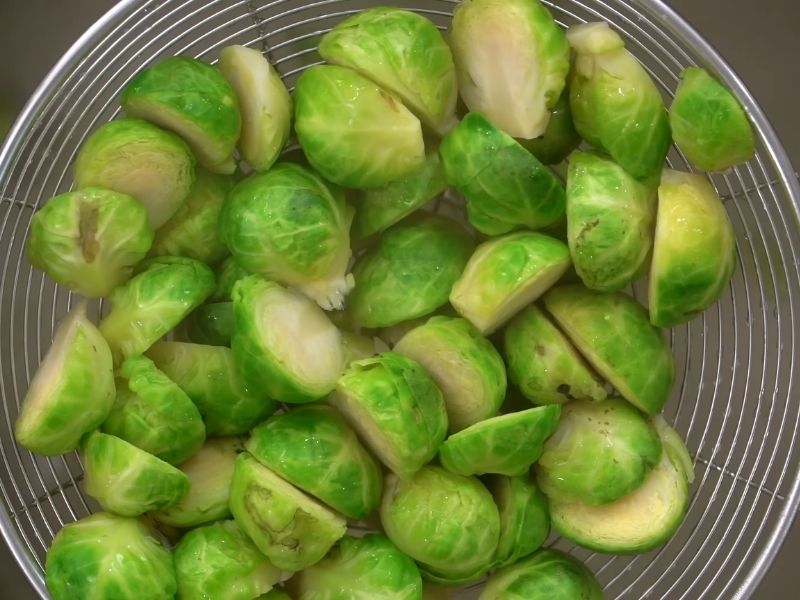
1. Trim and Blanch: Slice a thin sliver off each stem and peel away any loose outer leaves. Halve the sprouts, then drop them into a pot of boiling water salted with 1 1/2 tablespoons kosher salt. Cook 3 to 6 minutes, depending on size.
The sprouts turn a brighter green and smell grassy and clean once they’re ready to come out.
2. Shock and Dry: Spread the blanched sprouts over a towel-lined sheet pan, then pat them dry with a second towel. Wet sprouts steam instead of browning in the hot oven, so don’t skip drying them well.
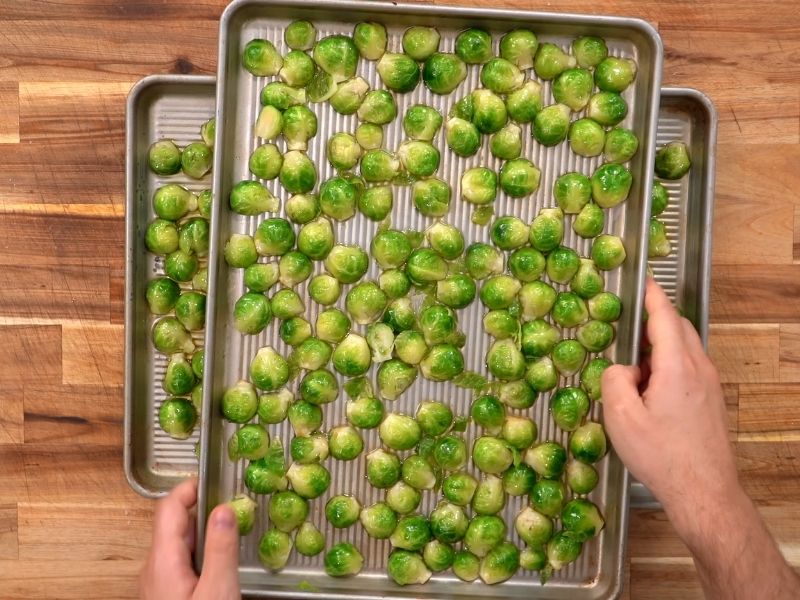
3. Season and Arrange: Toss the dried sprouts with 2 tablespoons olive oil and 1 teaspoon kosher salt. Coat a sheet pan with the remaining oil, then arrange the sprouts cut side down, leaving space between each piece.
Crowding the pan traps steam, and steam keeps the sprouts pale instead of browned.
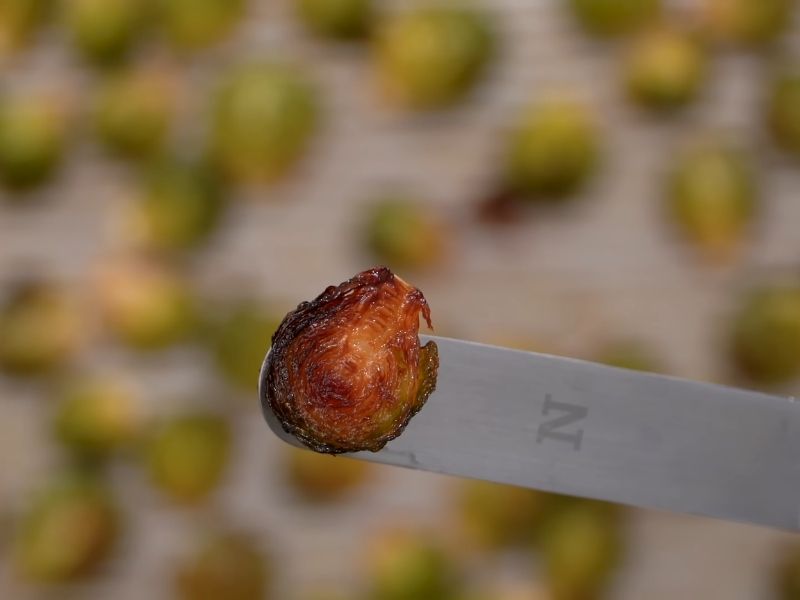
4. Roast: Slide the pan into a 425°F oven for 20 minutes, then flip each sprout. Continue roasting another 6 to 8 minutes, until the cut sides turn deep golden brown.
Small sprouts finish sooner than large ones, so check the small ones first.
5. Render the Bacon: While the sprouts roast, cook the diced bacon in a skillet over medium heat for about 8 minutes, until crisp. Remove it to a paper towel, keeping the fat in the pan.
6. Build the Glaze: In a small saucepan over medium-high heat, simmer the maple syrup alone for 2 minutes. Whisk in the sherry vinegar and simmer 3 more minutes, until syrupy, then whisk in the cold butter and a pinch of salt.
The glaze burns fast once it thickens, so pull it the moment it coats the back of a spoon.
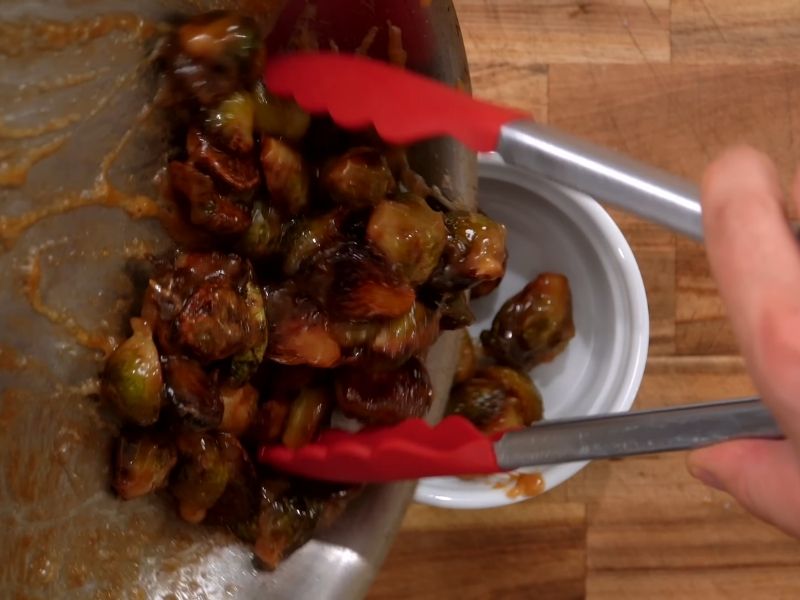
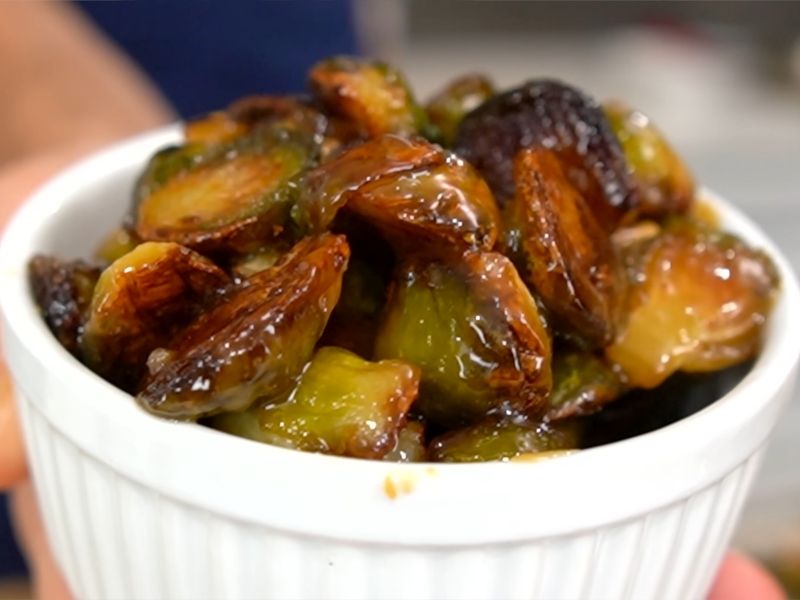
7. Toss and Serve: Toss the roasted sprouts and crispy bacon in the warm glaze until coated. Plate them, then scatter on the toasted pecans and lemon zest. Finish with a pinch of flaky salt.
Alternative Cooking Methods
The main method uses a standard oven at 425°F for 26 to 28 minutes total. Convection runs hotter, so drop to 400°F and check a few minutes early. A sheet pan preheated for 5 minutes first adds extra sear on contact.
In an air fryer, cook the blanched, dried sprouts at 400°F for 10 to 12 minutes, shaking the basket halfway. Work in two batches for 2 pounds, since crowding stops browning. Toss with bacon and glaze after cooking, not in the basket.
On the stovetop, sear the blanched, dried sprouts cut side down in a hot cast iron skillet for about 4 minutes, until browned. Add shallot and garlic in the last minute, then deglaze with vinegar and maple, finishing with butter and bacon. This skips the oven, and centers stay firmer.
What Is the Secret to Crispy Saltgrass-Style Brussels Sprouts?
Skip the parchment paper: It insulates the pan and blocks the direct contact that browns the cut sides.
Use a dark, heavy sheet pan: not a shiny one. Dark metal holds more heat and sears the sprouts faster.
Leave at least a finger’s width of space: between each sprout, since crowding traps steam around them.
Preheat the sheet pan itself: for 5 minutes before adding the oil. A hot pan sears the moment the sprouts touch down.
Add a fast stovetop sear after roasting: about 90 seconds in a hot skillet, for extra crunch without deep frying.
Dry the sprouts on a towel: not just a plate. A towel pulls surface water away instead of just holding it in place.
Delicious Variations on Saltgrass Steakhouse Brussels Sprouts
Spicy Honey Version: Swap the maple syrup for hot honey and add a pinch of cayenne to the glaze. The heat plays well with the bacon, and this version pairs nicely with grilled chicken thighs.
Balsamic Fig Version: Use balsamic vinegar and a spoonful of fig jam in place of the sherry vinegar and maple. The glaze turns darker and thicker, good for a holiday table.
Parmesan Crust Version: Scatter shaved parmesan over the sprouts in the last 3 minutes of roasting. It melts into a light, salty crust that holds up well next to steak.
Vegan Version: Skip the bacon and swap the butter for a plant-based stick. Add a scant 1/2 teaspoon smoked paprika to the glaze for the smoky note bacon would otherwise give.
Extra Crunch Version: Double the pecans and toast a handful of panko in the bacon fat before scattering it on top. Good for anyone who wants more texture than sauce.
Apple Cider Version: Use apple cider vinegar and honey instead of sherry vinegar and maple. The glaze turns milder and a little floral, closer to a Thanksgiving flavor profile.
How to Serve Saltgrass Steakhouse Brussels Sprouts
A ribeye, a sirloin, or a New York strip all work well next to this dish. The glaze has enough acidity to cut through a fatty cut of beef.
Grilled chicken thighs pair well too, especially with the Spicy Honey variation on the side. For other steakhouse sides, try garlic mashed potatoes or creamed spinach alongside the sprouts.
This dish also fits a Thanksgiving or holiday spread, since it holds up on a buffet better than most green vegetables do.
For a dinner party, plate the sprouts family-style on a warm platter, and scatter the pecans on last so they stay crunchy under the lights.
Make-Ahead, Storage, and Reheating Tips
The sprouts can be blanched and dried up to 1 day ahead, then stored in the fridge until you’re ready to roast. This saves time on a busy afternoon without losing texture.
Cooked leftovers keep in an airtight container in the fridge for up to 3 days. Freezing is not recommended, since thawed sprouts turn watery and lose the crisp edge entirely.
Reheat leftovers in a 400°F oven for about 8 minutes, spread out on a sheet pan, not stacked. This restores most of the crisp edge a microwave destroys.
For a dinner party, keep the glaze in a separate container and toss it with the sprouts right before serving. This keeps them from turning soft while they wait on a buffet.
Saltgrass Steakhouse Brussels Sprouts Recipe FAQs
1. Why Are My Brussels Sprouts Soft Instead of Crispy?
Wet sprouts going into the oven is the most common cause. Dry them thoroughly after blanching, give them enough space on the pan, and roast at the full 425°F.
2. Why Aren’t My Brussels Sprouts Browning?
Low oven temperature and overcrowding are the usual culprits. A pan that’s too full traps steam around the sprouts, and steam keeps the surface pale no matter how long it roasts.
3. Why Do My Brussels Sprouts Taste Bitter?
Old or oversized sprouts tend to taste more bitter than smaller, fresher ones. Blanching pulls out some of that sharpness, and a splash of sweetener in the glaze balances what’s left.
4. Why Is My Glaze Burning in the Pan?
Sugar-based glazes go from syrupy to burnt fast once the water cooks off. Pull the pan off the heat the moment it coats the back of a spoon, not after.
5. Why Did the Glaze Make My Sprouts Soggy?
Tossing the glaze with sprouts too early lets the sugar draw out moisture over time. Glaze the sprouts right before serving, especially for anything sitting out for a while.
6. How Do I Keep the Centers Tender Without Drying Them Out?
Blanching is the answer here. Skipping that step and roasting from raw dries the centers out before the outside gets any real color.
7. Should the Glaze Go On Before or After Roasting?
After. Roasting the sprouts first builds a dry, browned surface, and the sugar in an early glaze would burn long before the sprouts finish cooking.
8. Can I Use Frozen Brussels Sprouts?
Frozen sprouts hold extra water, and roasting them wet steams them instead of browning them. Thaw and dry them completely first, or expect a softer result than fresh sprouts give.
9. How Do I Keep a Big Batch Warm and Crisp for a Party?
Hold roasted, unglazed sprouts in a low, 200°F oven, and toss on the glaze in small batches right before serving, so nothing sits soaked for long.
10. What Vinegar Works Best Without Sherry Vinegar on Hand?
Apple cider vinegar or cherry vinegar both work well in the glaze. The flavor turns slightly sweeter and less nutty, but the balance of sweet and sour stays intact.
Saltgrass Steakhouse Brussels Sprouts Recipe
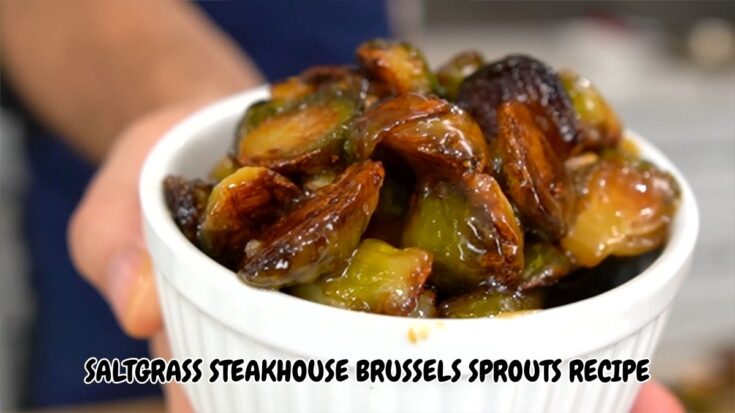
Saltgrass Steakhouse Brussels Sprouts Recipe uses a blanch-then-roast method for deep caramelized edges, tossed in a sherry-maple glaze and topped with bacon and pecans, ready in about an hour.
Ingredients
- 2 pounds Brussels sprouts
- 4 quarts water
- 1 ½ tablespoons kosher salt (for blanching)
- 3 tablespoons olive oil, divided
- 1 teaspoon kosher salt
- 1 medium shallot, thinly sliced
- 2 cloves garlic, minced
- 6 strips bacon, diced
- ⅓ cup sherry vinegar
- ¼ cup maple syrup
- 3 tablespoons unsalted butter, cold
- ⅓ cup pecans, toasted and chopped
- Zest of ½ lemon
- Flaky sea salt, to finish
Instructions
- Slice a thin sliver off each stem and peel away any loose outer leaves. Halve the sprouts, then drop them into a pot of boiling water salted with 1 1/2 tablespoons kosher salt. Cook 3 to 6 minutes, depending on size.
- Spread the blanched sprouts over a towel-lined sheet pan, then pat them dry with a second towel.
- Toss the dried sprouts with 2 tablespoons olive oil and 1 teaspoon kosher salt. Coat a sheet pan with the remaining oil, then arrange the sprouts cut side down, leaving space between each piece.
- Slide the pan into a 425°F oven for 20 minutes, then flip each sprout. Continue roasting another 6 to 8 minutes, until the cut sides turn deep golden brown.
- While the sprouts roast, cook the diced bacon in a skillet over medium heat for about 8 minutes, until crisp. Remove it to a paper towel, keeping the fat in the pan.
- In a small saucepan over medium-high heat, simmer the maple syrup alone for 2 minutes. Whisk in the sherry vinegar and simmer for 3 more minutes, until syrupy, then whisk in the cold butter and a pinch of salt.
- Toss the roasted sprouts and crispy bacon in the warm glaze until coated. Plate them, then scatter on the toasted pecans and lemon zest. Finish with a pinch of flaky salt.
Nutrition Information:
Yield:
6Serving Size:
1Amount Per Serving: Calories: 240
Blanching before roasting is not required, but skipping it changes the outcome. Boiling water pulls some of the raw bite out of the sprouts and seasons them from the inside. Sprouts roasted straight from raw can brown fast, since there’s no extra surface moisture to cook off first.
Blanched sprouts trade some of that early browning speed for a softer, more even center. For a quick weeknight side, roasting from raw works fine. This Saltgrass Steakhouse Brussels Sprouts Recipe leans on that boiling step for its deep color and tender center.